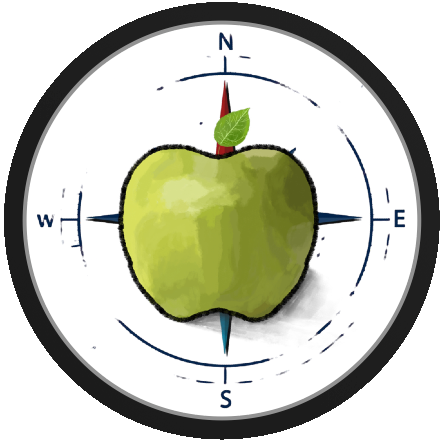

The Principle of a Complete System

Examining a system at five levels, corresponding to the five primary elements of our world (Ether, Air, Fire, Water and Earth), is an attempt to obtain the most complete picture of the system, which always consists of combinations of all the above elements.
These five levels are like five nesting dolls, each performing its own functions and tasks, but in collaboration with its sister dolls.
For a complete understanding of any system under consideration, it is crucial to have a picture of its five-level representation. Moreover, combining the system’s consideration with other principles (United Beginning, Duality, Trinity and Four Paths) will only enhance understanding of the system’s essence, form, and content, as well as improve the effectiveness of its management.



Interpretation
Any complete system should be considered as a combination of levels (the basic quantity is 5), which are in a clear hierarchical relationship with each other.
Catchphrases related to this principle
«The whole is greater than the sum of its parts.»
«Life is a whole thing, and so is luck; neither one nor the other can be taken apart.»
«Judge for yourself. This finger of mine, so receptive and sensitive, possessing such subtle and varied dexterity, so strong, so powerful, capable of bending and unbending with the help of a whole intricate system of levers—muscles—this finger of mine is not me. Chop it off. I am alive.»
What does this shed light on?
Shows the composition (content) of each of the 5 basic levels of the system, as well as their relationship with each other.
Examples
- 5 limbs in the human body
- 5 fingers on each limb
- 5 continents in the continent system
- Smell (1), taste (2), sight (3), touch (4), hearing (5) in the human sensory system
- Land (1), water (2), fire (3), air (4), ether (5) in the system of primary elements…
How to apply in business
In cases where it is necessary to «see» the system as a whole, to understand its components and the relationships between them (in situations of creation, diagnostics or operational management of the system).
The Principle of United Beginning
All systems start from one point (the main one), and this «one» already includes all future components of the system
The Principle of Duality
Any system, evolving, has a choice of two global directions (development/degradation), towards one of its sources, which, in turn, are homogeneous opposites
The Trinity Principle
The Real System is 3D, at least three-dimensional, and simultaneously exists in three worlds / three dimensions / three times, etc. {Influence}, {Environment of Influence}, {The Meaning of Influence}
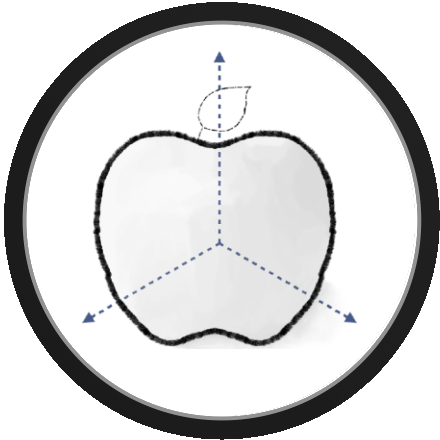
The 4-Paths Principle
The movement of any System is possible in one of four main directions, and always the same ones…